A Diwali Night Celebration
On October 20, 2025, at 7p.m, I hosted a small Diwali celebration at my home in Kamloops, British Columbia. The word Diwali, derived from the Sanskrit words Deepa and Wali, symbolizes hope and spiritual renewal, and is celebrated to honor the triumph of good over evil (Singha & Singha, 2024; Khelawan, 2025). While I celebrated in Kamloops, Diwali is observed worldwide by Hindus and Sikhs (Times of India, 2025).
After four years in Canada without a proper celebration, I wanted this year to be different. Since Diwali is usually celebrated between mid-October and November, and in 2025 it fell on October 19–20 (National Geographic Kids, n.d.), I chose to host the event at my home on October 20.
I cooked a full Indian meal including paani puri (crispy hollow shells filled with tangy water and potatoes), pakode (spiced, deep-fried fritters), halwa (a warm, sweet dessert made from semolina), and chickpea rice. My goal was simply to create an inclusive Diwali where both my Indian and Canadian friends could celebrate together and share a little piece of home.
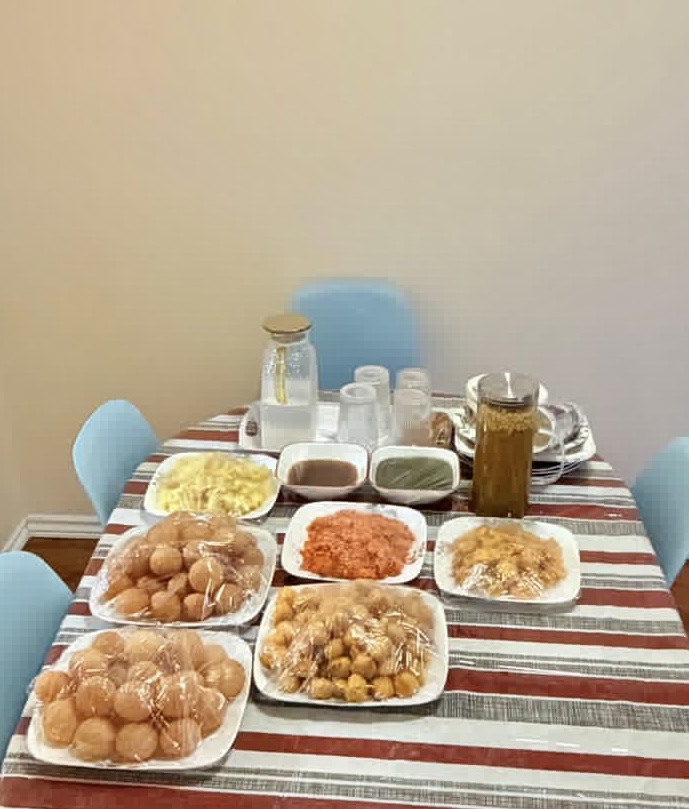
Preparing for a Festival Far from Home
The real preparation started hours before anyone arrived. Because Diwali celebrations often include music, dance, traditional clothing, food, crafts, and lights (Booth, 2015), I cleaned the house, arranged the temple, and decorated the living room before guests arrived. I love hosting and capturing memories, so I kept my camera nearby to document the setup, the laughs, and the quiet moments of prayer.
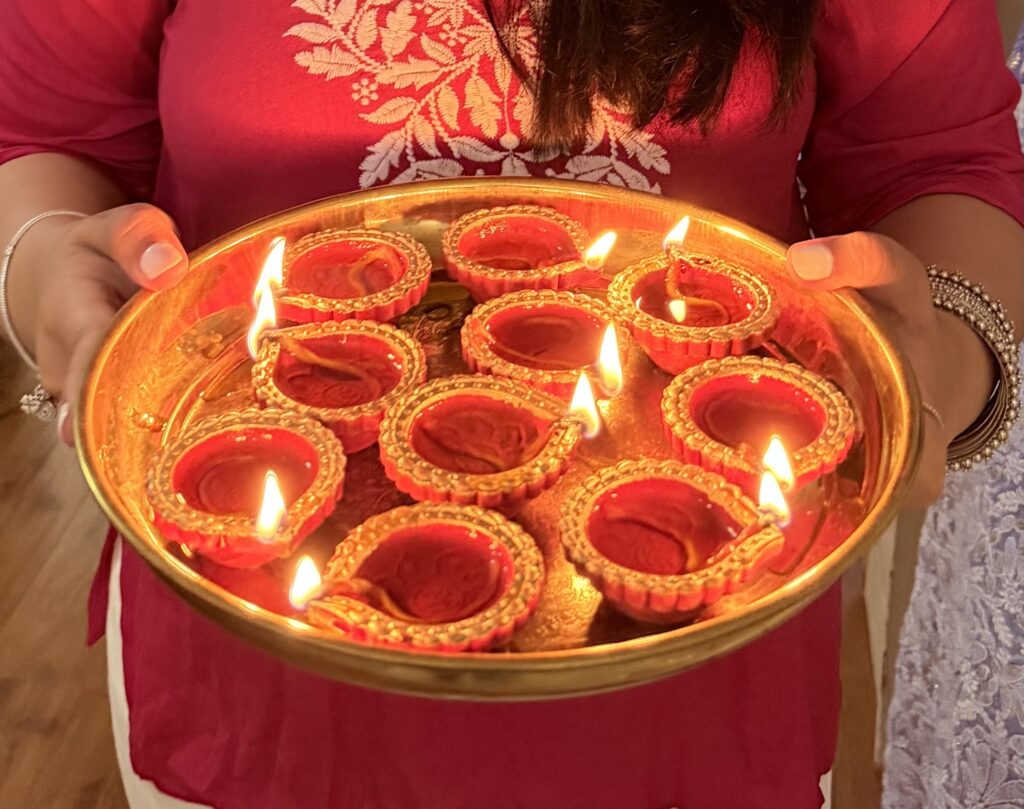
Cooking took time, especially since I prepared different spice levels for different tastes. I wanted everyone to feel comfortable and included. Before sunset, I placed small clay lamps called diyas around the house.
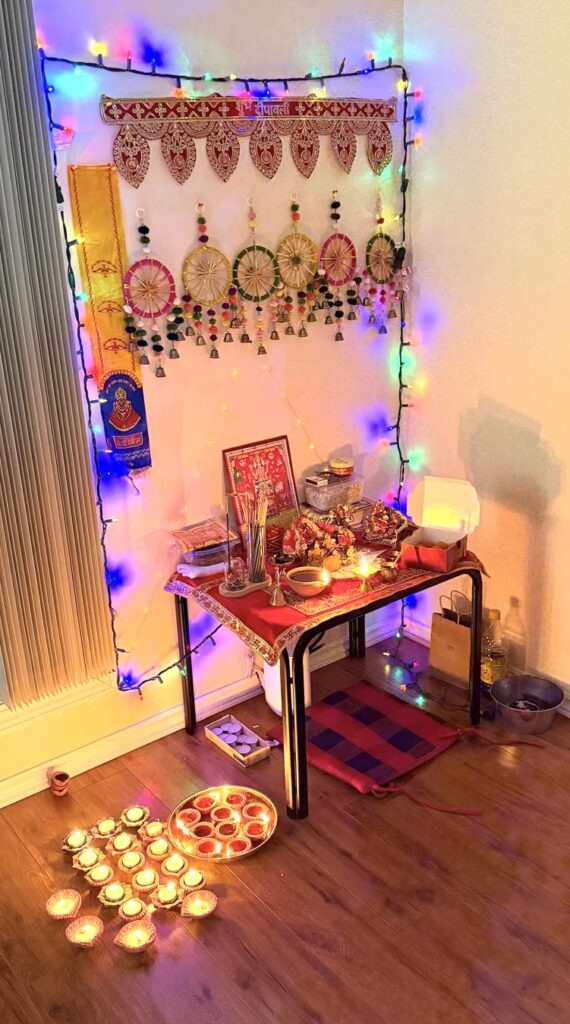
Welcoming Guests into the Celebration
Hindus in Canada celebrate Diwali to maintain cultural identity through stories, rituals, and traditions (Khelawan, 2025), so I wanted my Canadian friends to experience these firsthand. As guests arrived, the atmosphere became warm and lively. One of my friends, an older and knowledgeable person about Indian culture, took the lead in explaining the traditions to my Canadian guests. We began the evening with prayers. After that, we applied tikka, a small red mark made from sandalwood placed on the forehead during blessings. They were all excited to be included and asked questions throughout, which made the experience feel even more meaningful. I also attempted a rangoli, a colorful floor design made with color powder.
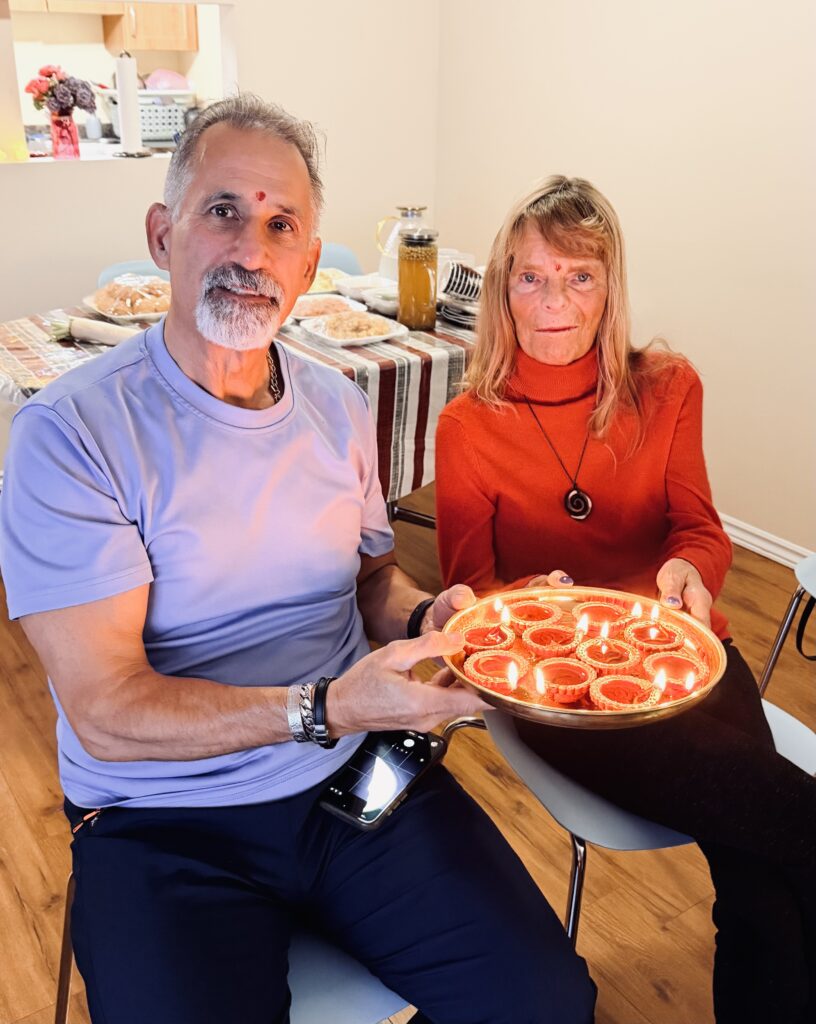
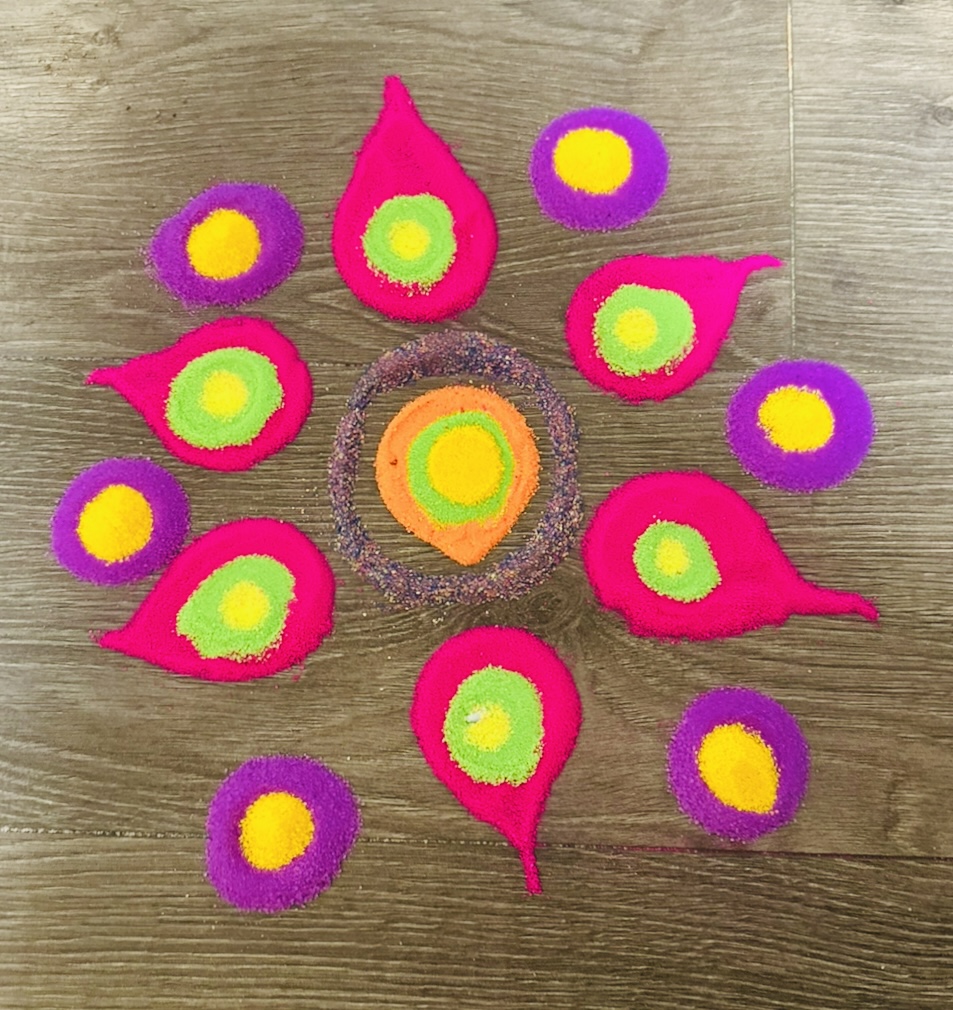
A Small Challenge and a Creative Fix
The only obstacle that night came from the weather. The wind outside was too strong, and the diyas kept blowing out no matter where I placed them. Outdoor diyas are an important part of Diwali, so this made me a little upset. Finally, a friend brought out battery-operated diyas he had saved from last year. We placed those outside instead, and the soft glow completed the atmosphere. It was a simple fix, but it reminded me how celebration is really about people, not perfection.
A Celebration That Brought Home Closer
By the time the night slowed down, and everyone began gathering their jackets and leftovers, I finally had a moment to breathe. Watching my friends, Indian and Canadian, laugh together in a cozy living room filled with warm lights and the smell of spices made me realize something important. Celebrating Diwali reminded me that home is not just a place, but a feeling created through connection, traditions, and shared joy (Khelawan, 2025). Even though I was far from Delhi it made me realise that home is not always a location, it can also be a feeling you create with the right people around you. For the first time in a long time, Diwali felt like mine again.
Referenceshe t
The following references are mentioned on this page theereefer
Booth, A. (2015). Whose Diwali is it? Diaspora, identity, and festivalization. Tourism Culture & Communication, 15(3).http://dx.doi.org/10.3727/109830415X14483038034209
Khelawan, R. M. (2025). Unpacking the Festival of Diwali in Canada: Where. In Asian Canada Is Burning: Theories, Methods, Pedagogies, and Praxes (p. 299).
National Geographic Kids. (n.d.). Diwali. https://kids.nationalgeographic.com/pages/article/diwali
Singha, R., & Singha, S. (2024). The symbolism of Diwali: A festival of light, hope, and renewal. Hope and Renewal. http://dx.doi.org/10.2139/ssrn.4983616
Times of India. (2025, October 11). 9 countries other than India that celebrate Diwali.https://timesofindia.indiatimes.com/life-style/travel/destinations/9-countries-other-than-india-that-celebrate-diwali/photostory/124434959.cms?picid=124435002